CUSTOM SOLUTIONS
Pick/Pack/Palletizing
Pick. Pack. Done.
End-of-line automation gives manufacturers a direct path to higher throughput, lower labor costs, and more consistent load quality.
Acieta designs and integrates custom systems built to handle complex product mixes and multiple pallet formats at your target production rate, from single-line case palletizers to high-speed systems handling multiple conveyors at once.
Capabilities
Tap our deep experience across automated end-of-line solutions.
Acieta integrates high-speed robotic pick and place systems for product sortation, lane splitting, and infeed accumulation, built to keep pace with your fastest production lines.
Custom vacuum end-of-arm tooling handles fragile, irregular, and mixed-format products with consistent grip force and placement accuracy across high-cycle production.
Integrated vision guides robots to locate, orient, and pick products reliably, even with incoming variation in position, format, or packaging style.
We specialize in custom end-of-arm tooling that allows robots to handle delicate products with controlled contact force, reducing damage and improving placement consistency.
Robotic case packing systems place products into cases with the speed, accuracy, and flexibility to handle multiple SKUs without dedicated tooling for every format.
Automated stretch wrapping systems apply consistent film tension and wrap patterns to finished pallets, reducing material waste and ensuring load stability for shipping.
Integrated box erecting systems form, fold, and present cases for packing automatically, removing a manual bottleneck from your packaging line.
In-line weigh systems verify pack weights automatically, catching short fills and overfills before they leave your facility.
Acieta designs custom conveyor systems that move bulk product through your end-of-line process with the speed and control your throughput demands.
Our systems handle multiple product types and pallet formats simultaneously, scaling to hundreds of case types without adding complexity or slowing throughput.
Robotic depalletizing systems unstack incoming loads at the start of your line, feeding product into your process consistently without manual intervention.
Automated slip sheet dispensing and handling integrates directly into your palletizing cell, keeping pallet builds clean and stable without adding labor.
Benefits
Higher Throughput
Robotic end-of-line systems run at sustained rates that manual packing and palletizing can't match, increasing output without adding headcount.
Flexible Production
Systems designed for mixed SKU handling and automatic changeover keep your line productive across a broad product mix.
Full Traceability
Integrated barcode readers, weight verification, and WMS or MES connectivity give you real-time visibility into every pallet built and every case packed.
Consistent Load Quality
Robots build pallets to the same pattern, with the same placement accuracy, every cycle, reducing damage in transit and improving load stability for your customers.
Improved Safety
Removing operators from repetitive lifting, stacking, and wrapping reduces injury risk and creates a better working environment across your entire end-of-line operation.
Less Turnover
Automating physically demanding end-of-line tasks reduces the management headaches that go with staffing these hard-to-fill roles, especially on second and third shifts.
Concept to quote
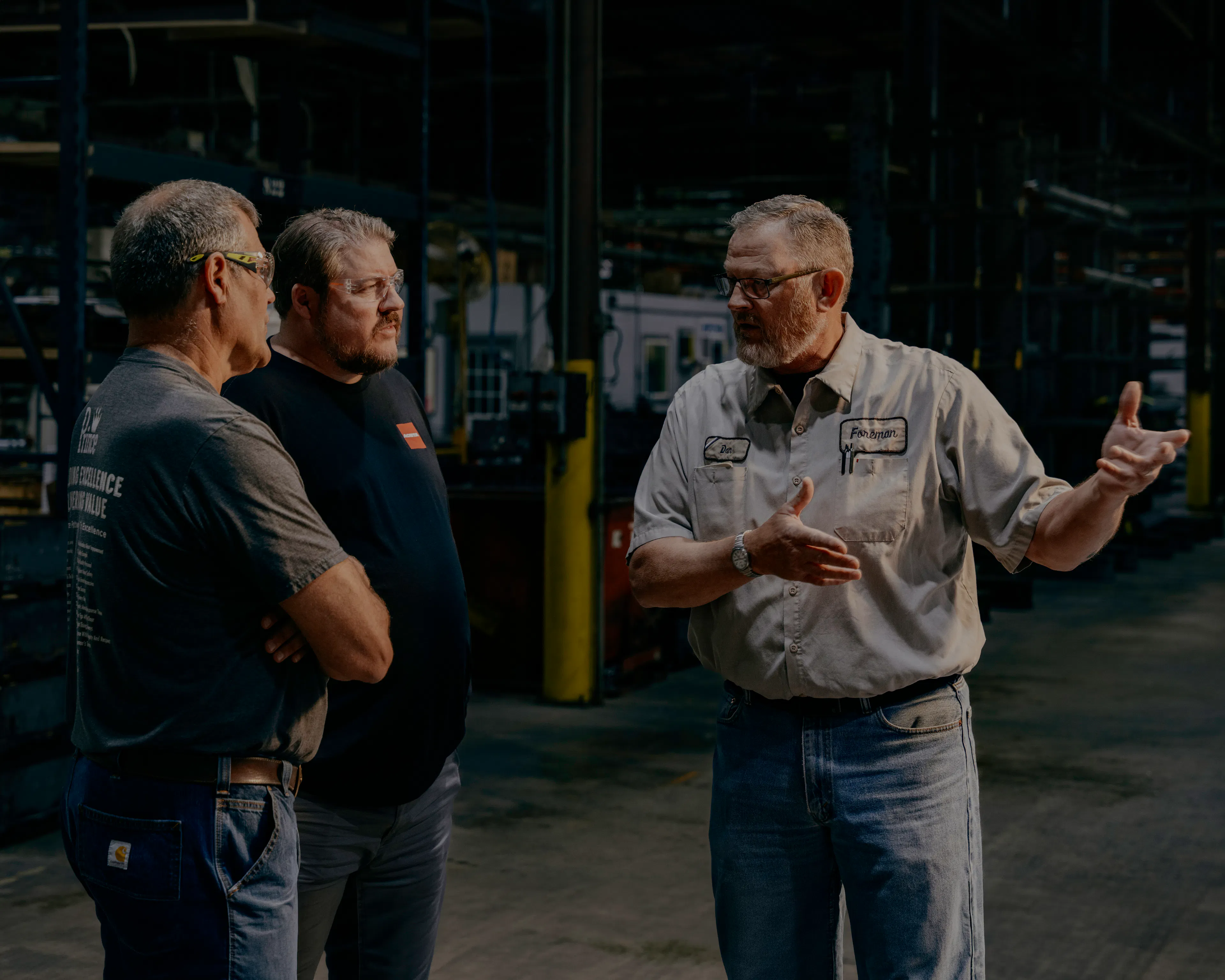
At Acieta, we de-risk automation by designing around human integration—ensuring technology works seamlessly with the people who use it. We simplify complexity and deliver reliable, predictable outcomes, so you can move forward with confidence.
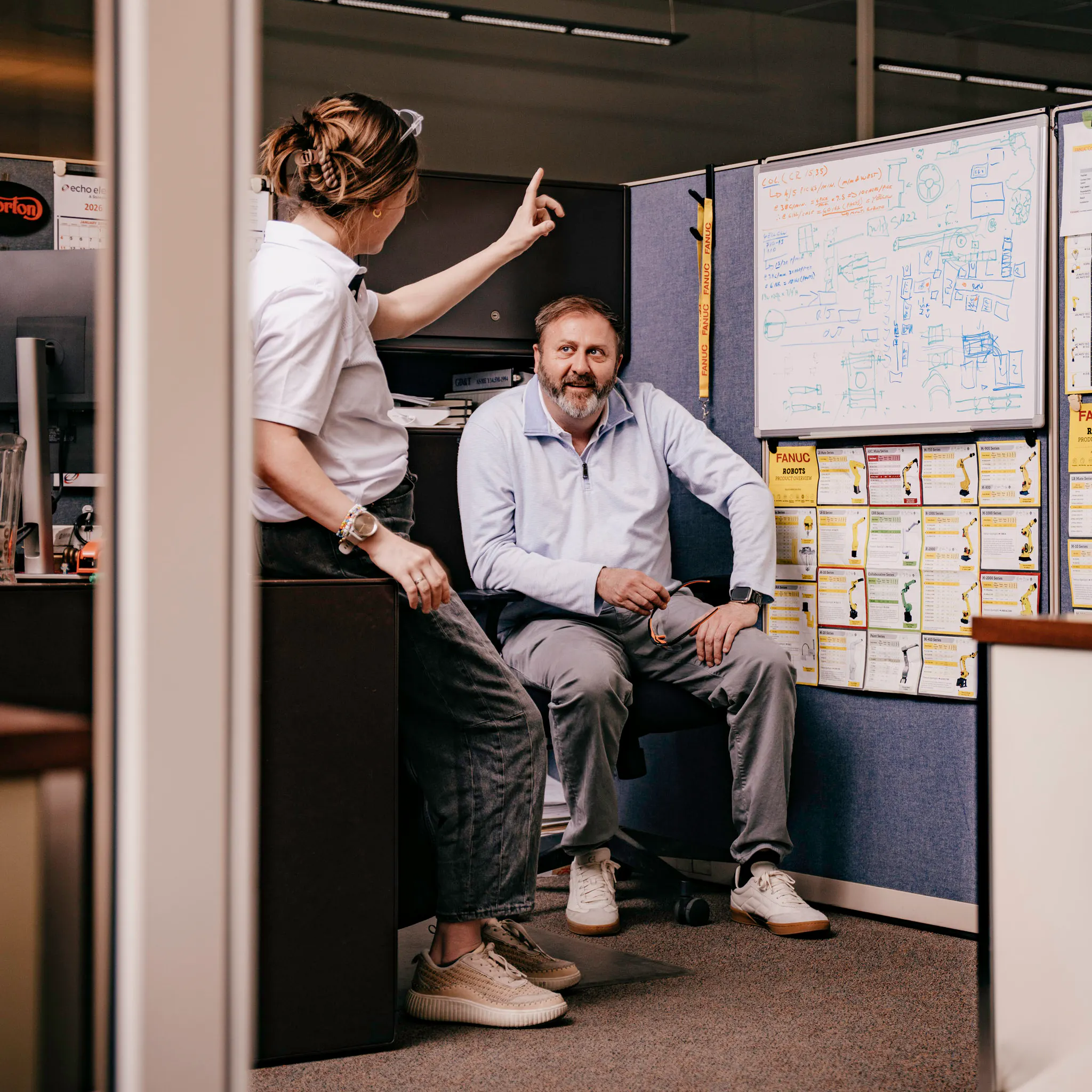
Preflight: Confidence Before You Commit
handshake Collaborate with a dedicated Acieta team on your floor
view_in_ar See the system modeled in 3D simulation software
fact_check Validate the solution with real-world feasibility tests
keyboard_double_arrow_right Move forward with a clear RFQ before the project begins
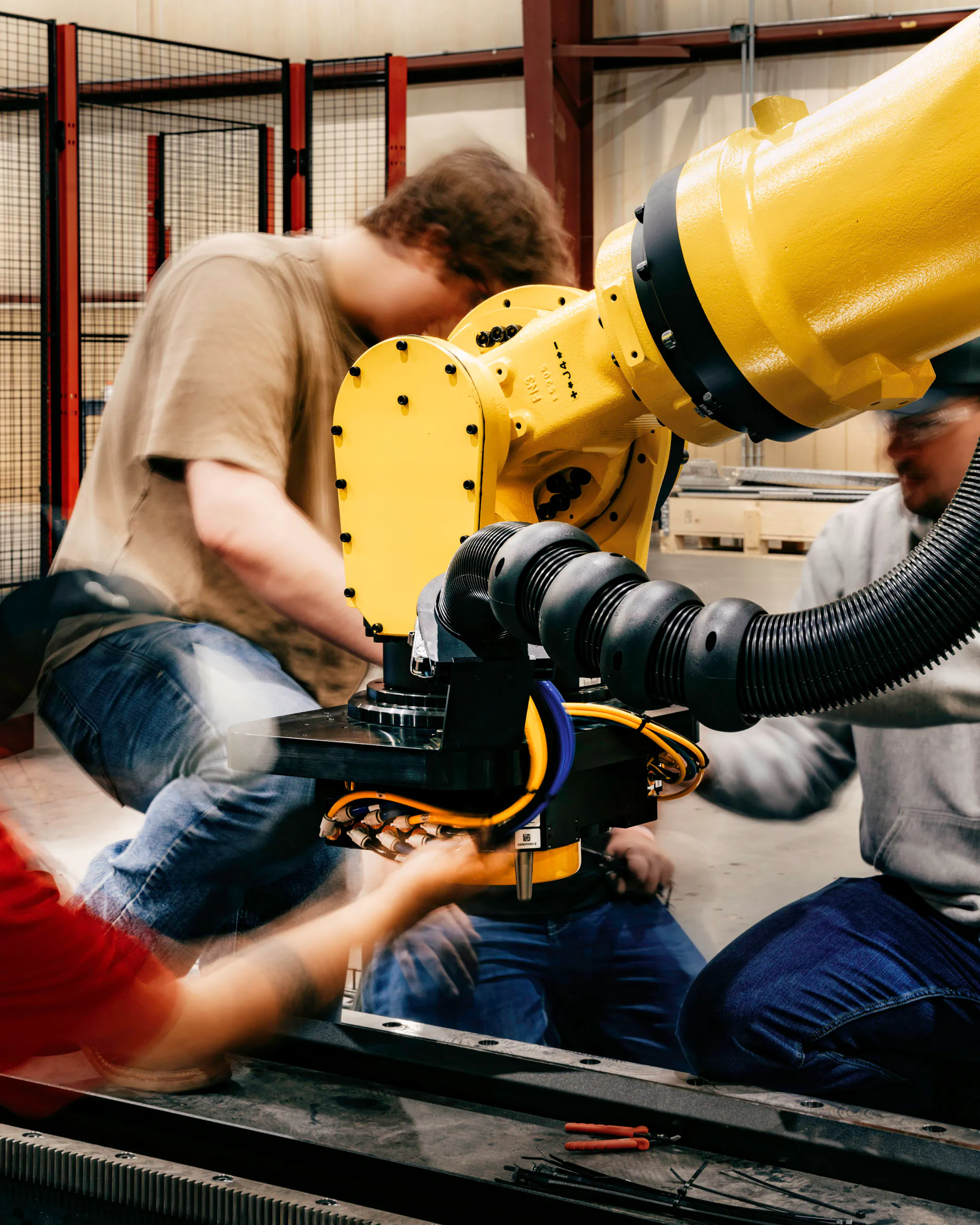
APEX: De-Risk the Delivery
build Work with a dedicated project manager
arrows_input Align every department on scope, timeline and design
info Stay informed with weekly progress updates
visibility See your system run to spec on our floor before it ships
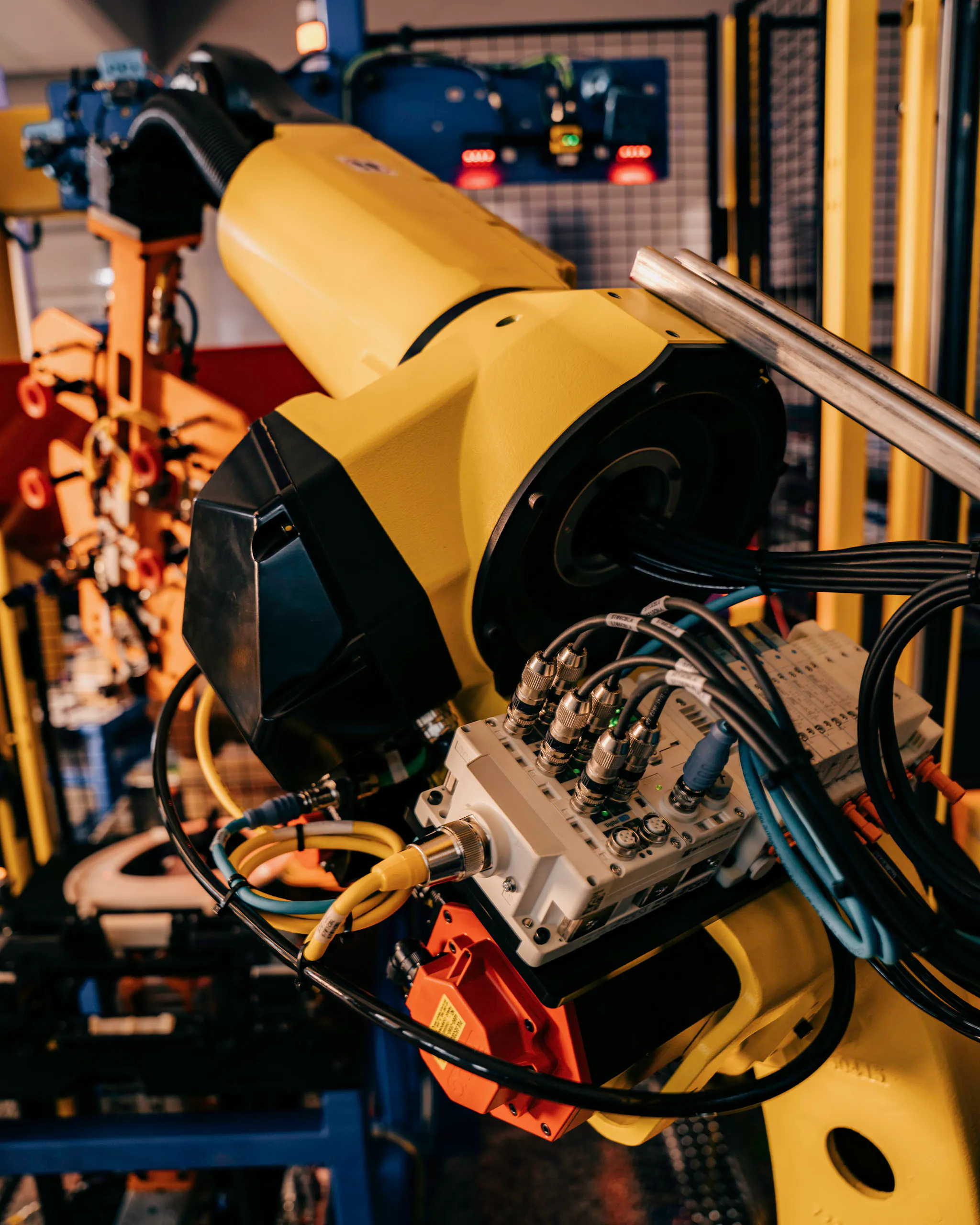
AIS: Sustained Service + Support
menu_book Upskill your operators with training on your system
home_repair_service Stay ahead of issues with preventative maintenance
precision_manufacturing Access high-quality parts with inventory management
call Reach expert service with 24/7 Emergency Response
Preflight: Confidence Before You Commit
handshake Collaborate with a dedicated Acieta team on your floor
view_in_ar See the system modeled in 3D simulation software
fact_check Validate the solution with real-world feasibility tests
keyboard_double_arrow_right Move forward with a clear RFQ before the project begins
APEX: De-Risk the Delivery
build Work with a dedicated project manager
arrows_input Align every department on scope, timeline and design
info Stay informed with weekly progress updates
visibility See your system run to spec on our floor before it ships
AIS: Sustained Service + Support
menu_book Upskill your operators with training on your system
home_repair_service Stay ahead of issues with preventative maintenance
precision_manufacturing Access high-quality parts with inventory management
call Reach expert service with 24/7 Emergency Response
Ongoing Support Services
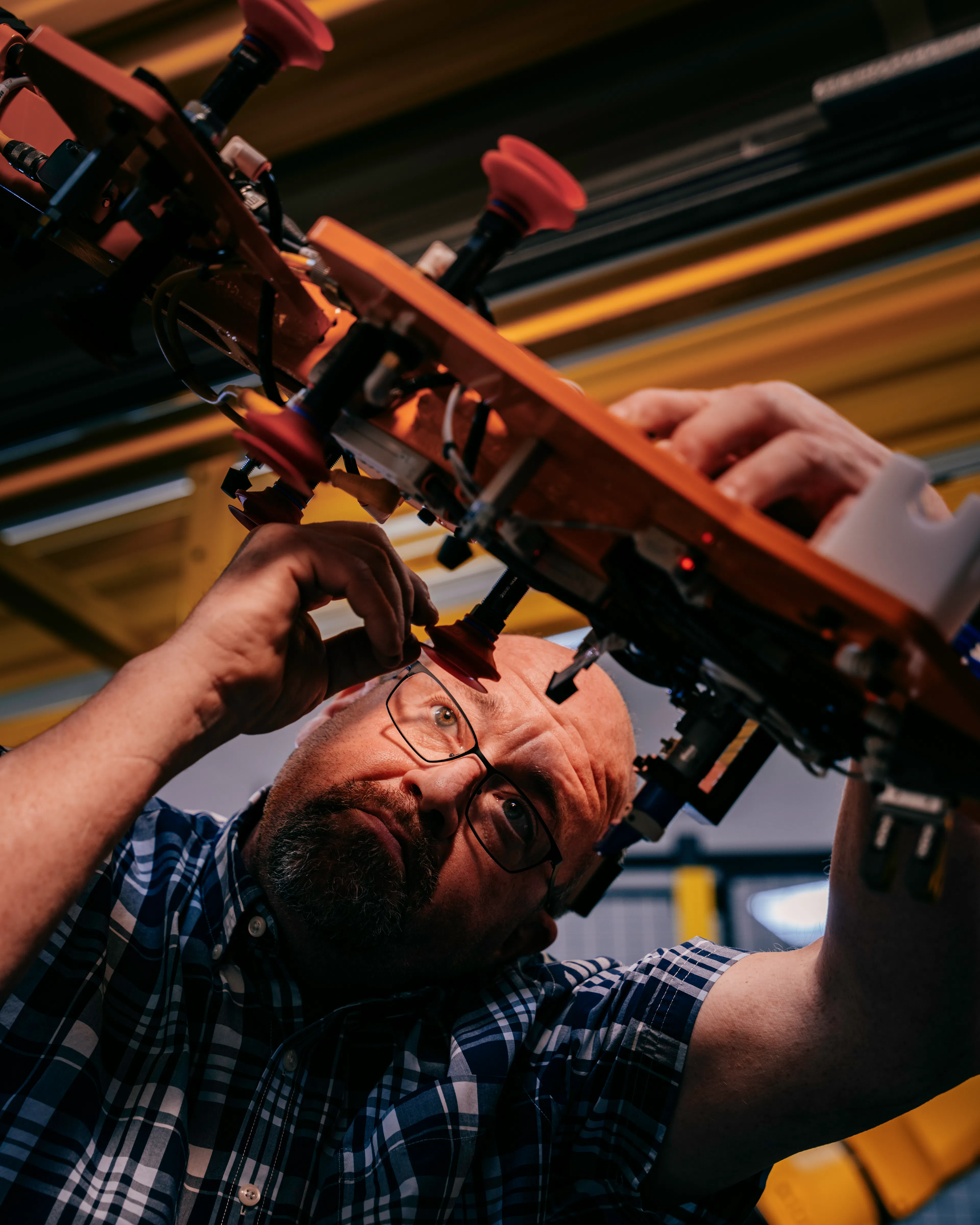
Preventative Maintenance
We help you avoid unexpected downtime and extend the life of your investment with regular inspections, adjustments, and proactive component care.
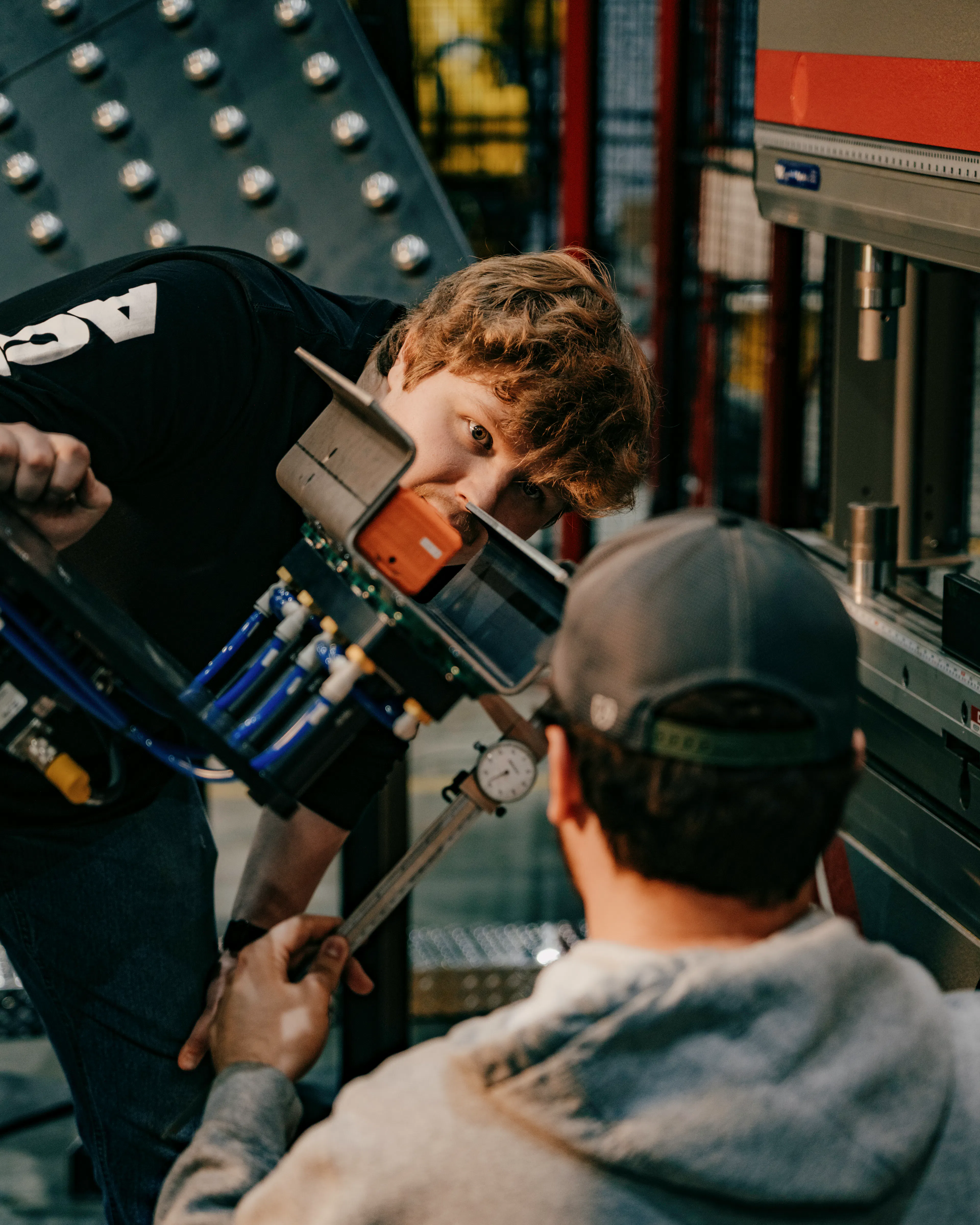
Training
Our training programs equip your team with the skills and confidence needed to operate, program, and maintain systems effectively.
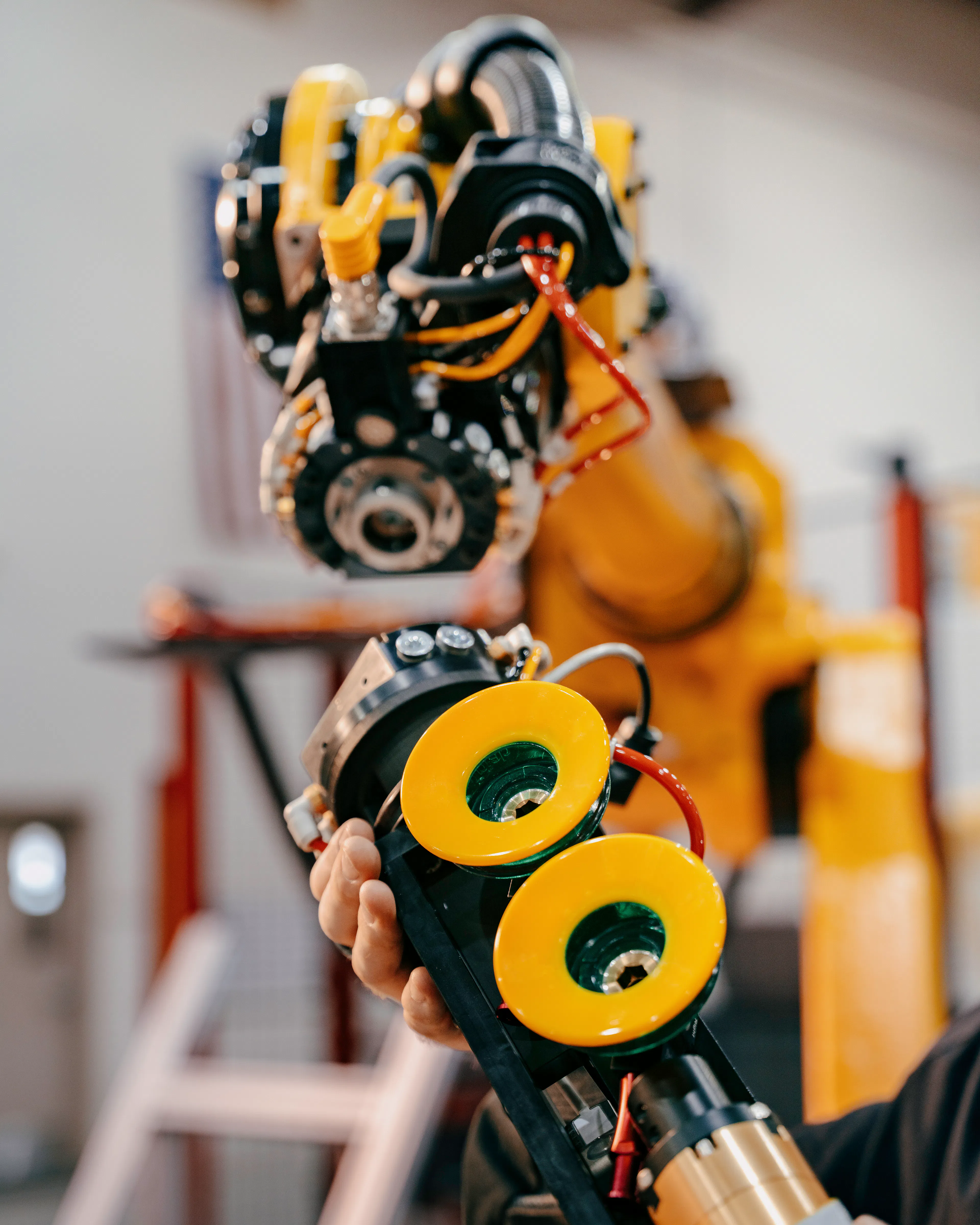
Spare Parts
Ensure the reliability and longevity of your system with a high-quality replacement parts.
End of Line Automation FAQs
Everything you need to know about robotic welding and fabrication systems
Modern end of line automation can accommodate significant variation through vision-guided picking, flexible end-of-arm tooling, programmable pallet patterns, recipe-driven controls and automated changeovers.
The practical limit depends on the differences between products, cases, pallet formats and handling requirements. In many applications, designing around product families provides the needed flexibility without engineering for variation the operation is unlikely to use.
End-of-line equipment rarely receives product at a perfectly consistent rate.
We start by understanding how product actually arrives at the end of the line including sustained and peak rates, surges, gaps, changeovers and expected downtime.
From there, accumulation and buffering can be placed strategically between picking, packing, palletizing and other processes to decouple equipment with different cycle times and recovery characteristics.
The goal is an integrated end-of-line system that can absorb normal production variability, recover from interruptions and maintain the required throughput without continually starving or blocking upstream processes.
Picking, packing, conveying, palletizing, dunnage handling, wrapping and finished pallet movement can be integrated into one system, but that doesn’t mean every process needs to be automated at once.
Labor, ergonomics, throughput constraints, equipment dependencies and existing assets all influence where integration creates the most value. In some applications, eliminating manual handoffs between processes is just as important as automating the individual operations.
Integration risk often exists at the interfaces between equipment rather than within the individual machines.
Product transfers, controls handshakes, accumulation, fault behavior, product tracking and restart logic all need to be defined across the system.
This becomes especially important when multiple OEMs are involved, because each machine can meet its own specification while the complete line still falls short of the production requirement.
Future capacity should be considered during initial system design when production growth, new SKUs or additional lines are reasonably expected.
That may mean reserving floor space, conveyor capacity, controls capability or connection points for another robot, palletizing position or downstream process.
The goal isn’t to overbuild the system today, but to avoid an architecture that makes tomorrow’s expansion unnecessarily difficult or expensive.