• Solutions

  • Industries

  • Service

2026-08-20

End of Line Automation: What Engineering Leaders Need to Know

Explore the engineering decisions that drive end of line performance, from equipment interfaces and controls to throughput and system ownership.
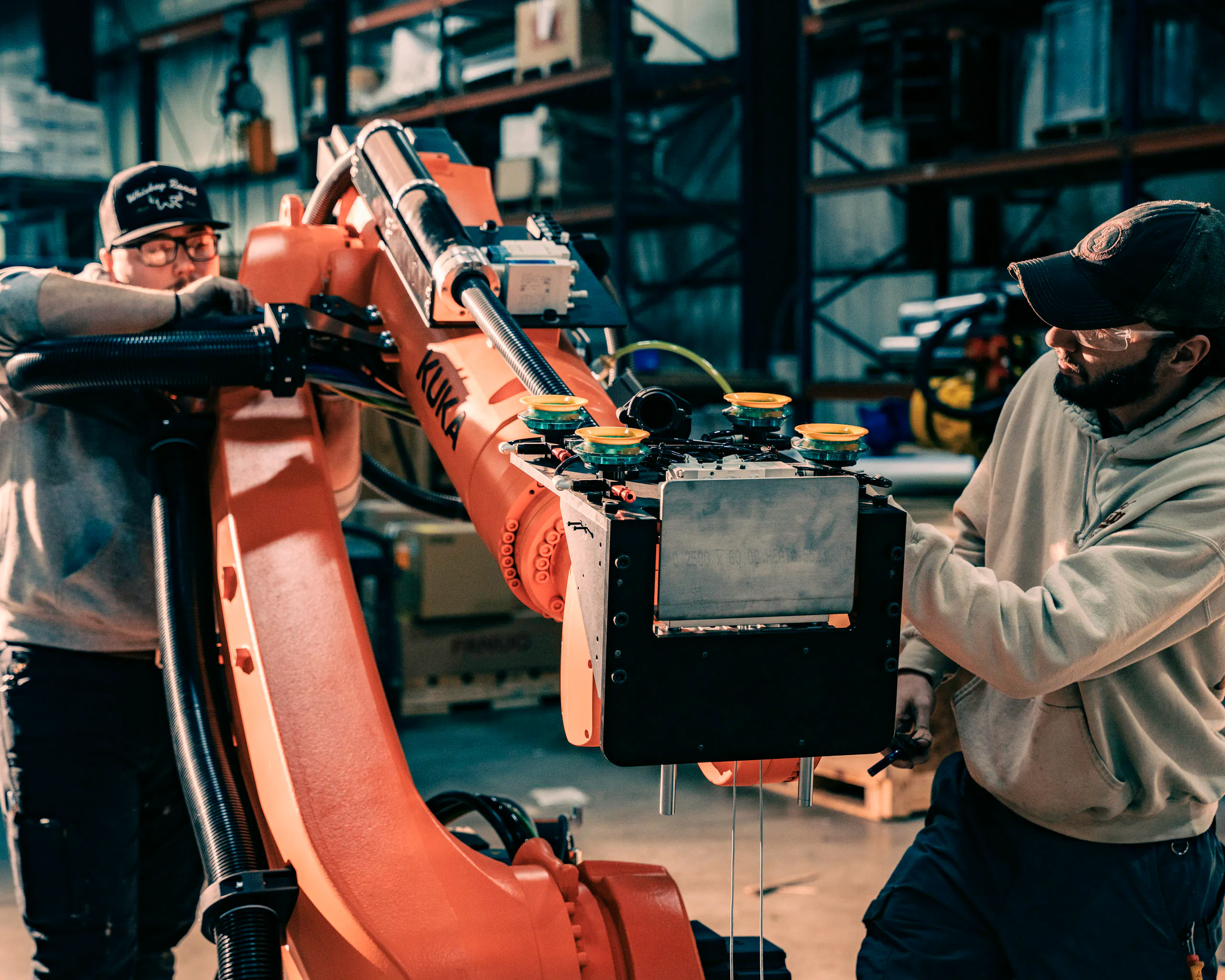
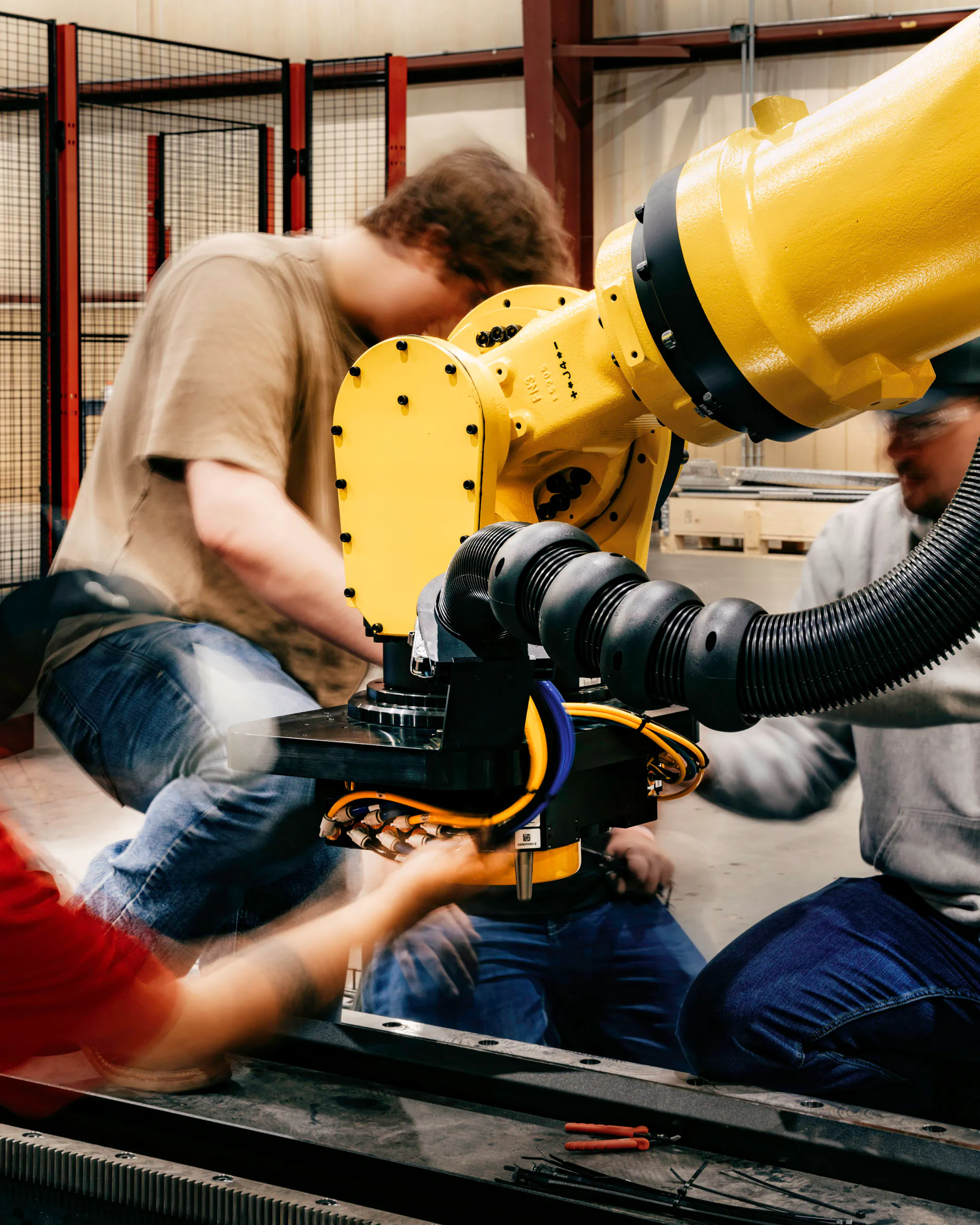
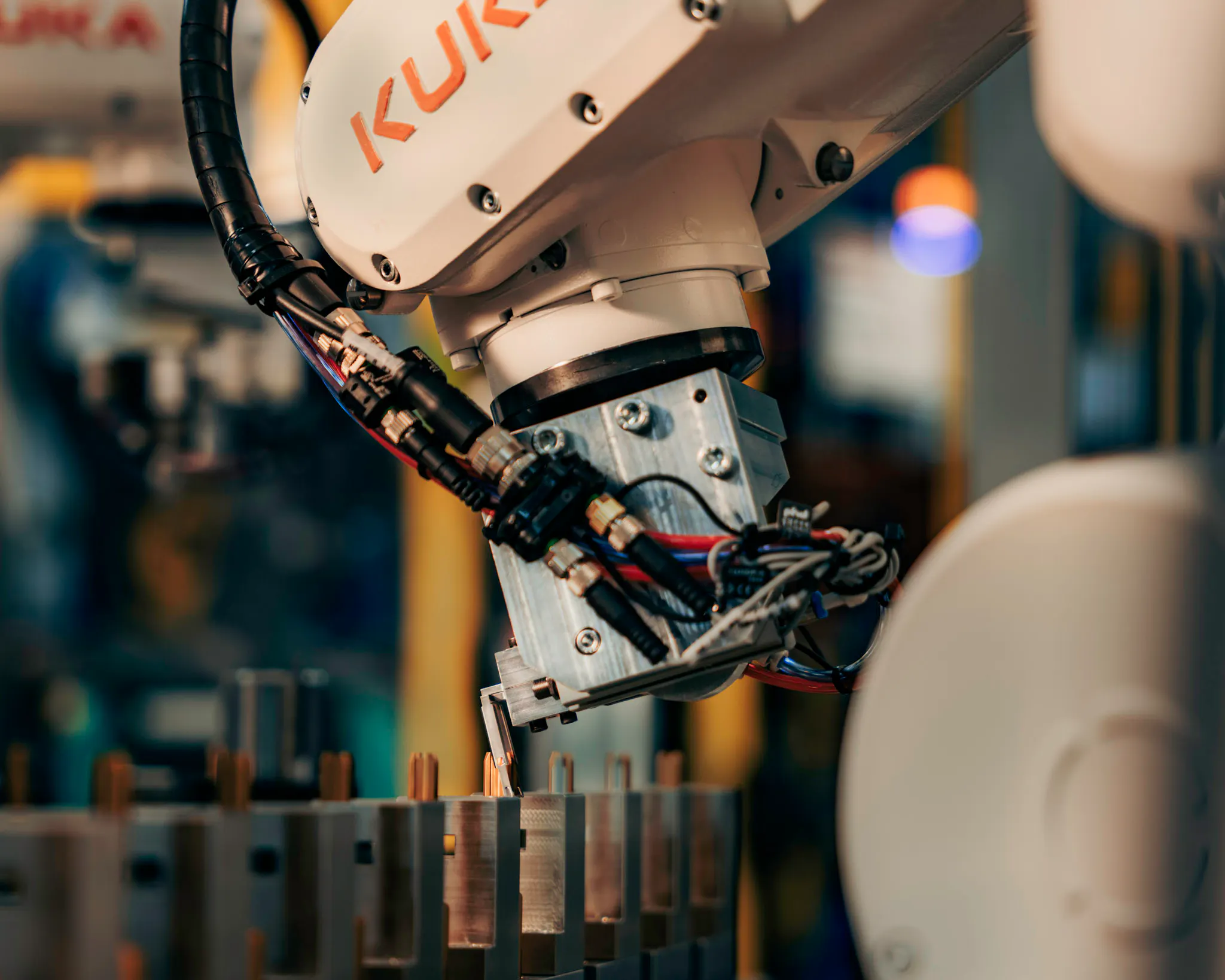
two men working on an orange KUKA robot

End of line automation can look straight forward

Product needs to be handled, packed, conveyed, palletized, wrapped, and moved to the next operation. The individual packaging automation technologies are well established. 

The challenge is making them perform as one system at the required rate, schedule, and flexibility the business will need in the future. 

An automated case packer, conveyor, robotic palletizer and stretch wrapper can each meet their individual specifications while the complete packaging line still falls short of its production target. 

The issues are often found between the machines: mismatched rates, insufficient accumulation, controls interfaces, product flow, or unclear ownership between operators or equipment suppliers. 

Before integrating packaging automation solutions, engineering leaders need to look beyond the equipment and define how the complete system needs to perform, who owns what, and have a pulse on future production needs. 

Building a Strong Packaging Line

Automated packaging lines often bring together equipment from multiple specialized suppliers.

A case packer may come from one OEM, conveyors from another, a stretch wrapper from another, and robotic automation from an integrator. 

But good packaging equipment does not automatically create a strong packaging line. 

Each of these packaging machines can meet its individual specifications while the complete line still struggles.  

The engineering challenge is in the interfaces between those systems. 

Equipment selection should follow the production requirements, not lead them. 

To build a strong packaging line, start with the full process, determine the result the project needs to deliver and the conditions the system will need to handle.

Define current and near-future requirements:
  • Where does the product come from and where does it need to go?
  • Required sustained and peak production rates 
  • Product and SKU range 
  • Case dimensions and weights 
  • Pallet sizes and patterns 
  • Product and SKU changeover frequency 
  • Where can product accumulate?
  • Existing upstream and downstream equipment 
  • What happens when downstream equipment stops?
  • Controls, safety, and data requirements 
  • Required production and startup dates 
  • Available floor space 
  • How are completed pallets removed?
  • Expected future products, SKUs and capacity 

Defining these requirements early gives the project team a common measure of success and provides the foundation for the automation architecture. 

Future requirements matter, too. A system designed around today’s product mix or production rate can quickly become the next capacity constraint.  

Balance Production Rates and Accumulation

Equipment rarely operates at a perfectly consistent rate. A downstream stop should not automatically force every upstream process to stop with it. 

Accumulation conveyor systems create controlled buffers between operations, but simply adding more conveyor is not the answer. The amount and location of accumulation should account for equipment rates, typical downtime and recovery, product characteristics, and available floor space. 

The goal is to provide the right amount of accumulation in the right locations so individual equipment events do not unnecessarily reduce the throughput of the complete line. 

Integrate Controls at the Line Level

Each machine may have its own PLC, HMI, recipes and fault logic, but operators need the packaging line to behave as one coordinated system. 

Engineering should define how machines communicate operating states, how upstream equipment responds to downstream faults, how recipes and changeovers are coordinated and how the system recovers after a stop. 

Operators also need visibility into what is happening across the line, while maintenance needs enough information to troubleshoot issues that cross individual equipment boundaries. 

Nate Tapper, Application and Controls Engineer at Acieta, has helped engineer complex end-of-line systems for glass+plastic packaging leaders like Stoelzle and Colbert Packaging. His experience reinforces the importance of engineering the interfaces, not simply selecting the equipment. 

"A lot of the engineering work is in the spaces between the machines. The handoffs, controls and interfaces have to work together for the complete system to perform."

Nate Tapper

Application and Controls Engineer, Acieta

Look Beyond the Palletizing Robot

Robotic palletizing is often the most visible part of an end-of-line system, but robot speed alone does not determine the system's throughput. 

Product needs to arrive at the right rate and orientation. Pallets and slip sheets need to be available. Tooling needs to accommodate the required product range. Pallet patterns and SKU changes need to be managed. Completed pallets need to exit the cell without restricting production. 

For high-mix operations, the automated palletizing system may also need flexible tooling, programmable pallet patterns, vision or recipe-driven controls to accommodate different case dimensions, weights or product configurations. When mixed-SKU palletizing or multiple pallet patterns are required, engineering also needs to account for how products are identified, routed, and presented to the palletizing system. 

The palletizing robot should be sized and engineered as part of the complete material flow, not as an isolated piece of the solution.

Plan for Real Production, Not Ideal Conditions

Rated speed tells you what a machine can do under defined conditions. It does not tell you how the complete line will perform over a production shift. 

Products change. Equipment stops. Materials vary. Pallets need replenishment. Changeovers take time. Upstream and downstream processes do not always run at the same rate. 

Engineering the line around those realities means asking what happens when conditions change: 
  • If downstream equipment stops, how long can upstream production continue? 
  • Where will product accumulate? 
  • What happens when the system changes from one SKU or pallet pattern to another? 
  • How does the line recover from a fault? 
  • What happens if an empty pallet or required dunnage is unavailable? 
  • Can the end of the line support planned increases in upstream capacity? 

Successful end of line automation solutions need to be designed around those realities to maintain production through the normal variability of a manufacturing environment. 

The answers become particularly important when individual machines meet their specifications, but the complete line does not. 

Establish System Ownership

When several equipment suppliers are involved, the responsibility for the complete line needs to be established before the project kicks off. 

Clear ownership does not mean one supplier needs to manufacture every piece of equipment. It means someone needs to be accountable for turning those individual pieces into a functioning system. 

When evaluating industrial automation integrators, engineering leaders should ask: 
  • Who owns overall system throughput? 
  • Who owns the physical, electrical and controls interfaces between equipment suppliers? 
  • Who determines accumulation requirements? 
  • How will multiple SKUs and future products be accommodated? 
  • Who owns the line-level controls and safety architecture? 
  • Who coordinates equipment suppliers and project schedules? 
  • How will integrated system performance be tested and accepted? 
  • Who owns the response when a problem crosses equipment boundaries after startup? 

These questions help define responsibility before the equipment reaches the plant floor. 

Experienced automation integrators should be able to coordinate the automation architecture, equipment interfaces, material flow, controls, safety and technology partners while maintaining clear responsibility for overall system performance. 

Real Projects. Real Results.

The complexity of end-of-line automation becomes clearer in real production applications. 

In each application, performance depends on more than the speed of an individual palletizing robot or packaging machine. Product flow, tooling, controls, material handling, changeovers, dunnage handling, safety and equipment interfaces all have to work together as one system. 

At Acieta, we believe integration is a team sport. The value comes from bringing the right people together while still establishing clear responsibility for the complete result. 

Stoelzle Glass Group

For Stoelzle Glass, Acieta engineered an automated palletizing system with custom EOAT capable of handling both loose glass bottles and formed cases.

The system automatically changes tooling based on the product being handled and can process up to 350 bottles per minute or 25 cases per minute.

Designing one system around two very different product formats required more than flexible tooling.

Product handling, controls and material flow all had to account for different speeds, orientations and handling requirements. By engineering those elements together, Stoelzle moves between production requirements without sacrificing throughput or adding separate systems.

Read the full story here.

KanPak

Acieta designed a robotic case palletizer to handle 41-pound cases at 12 cases per minute. The palletizing system incorporates two pallet-build locations, case and dunnage handling and automated stretch wrapping as part of the complete material flow. 

At that rate, every step downstream of the incoming case has to keep pace. The system manages the flow from case handling through pallet building, dunnage placement and stretch wrapping, helping KanPak maintain throughput without shifting the bottleneck further down the line.

Read the full story here.

HQ - Shelbyville, Indiana

888-900-8245

1677 W. 400 N.
Shelbyville, IN 46176

Council Bluffs, Iowa

712-328-3410

2906 21st Avenue
Council Bluffs, IA 51501

Tipton, Indiana

317-660-6454

986 W. Industrial Dr.
Tipton, IN 46072

Livonia, Michigan

734-432-5055

12623 Newburgh Rd
Livonia, MI 48150